Building an Interactive Game for Participatory Health Education
Building an Interactive Game for Participatory Health Education
The Problem
The anti-vaping education program used VIPP (Visualization in Participatory Planning) methodology for its group activities: students work in teams to visually map vape chemical effects onto human organ diagrams using a sticker system. Traditionally, this is a paper-and-card activity.
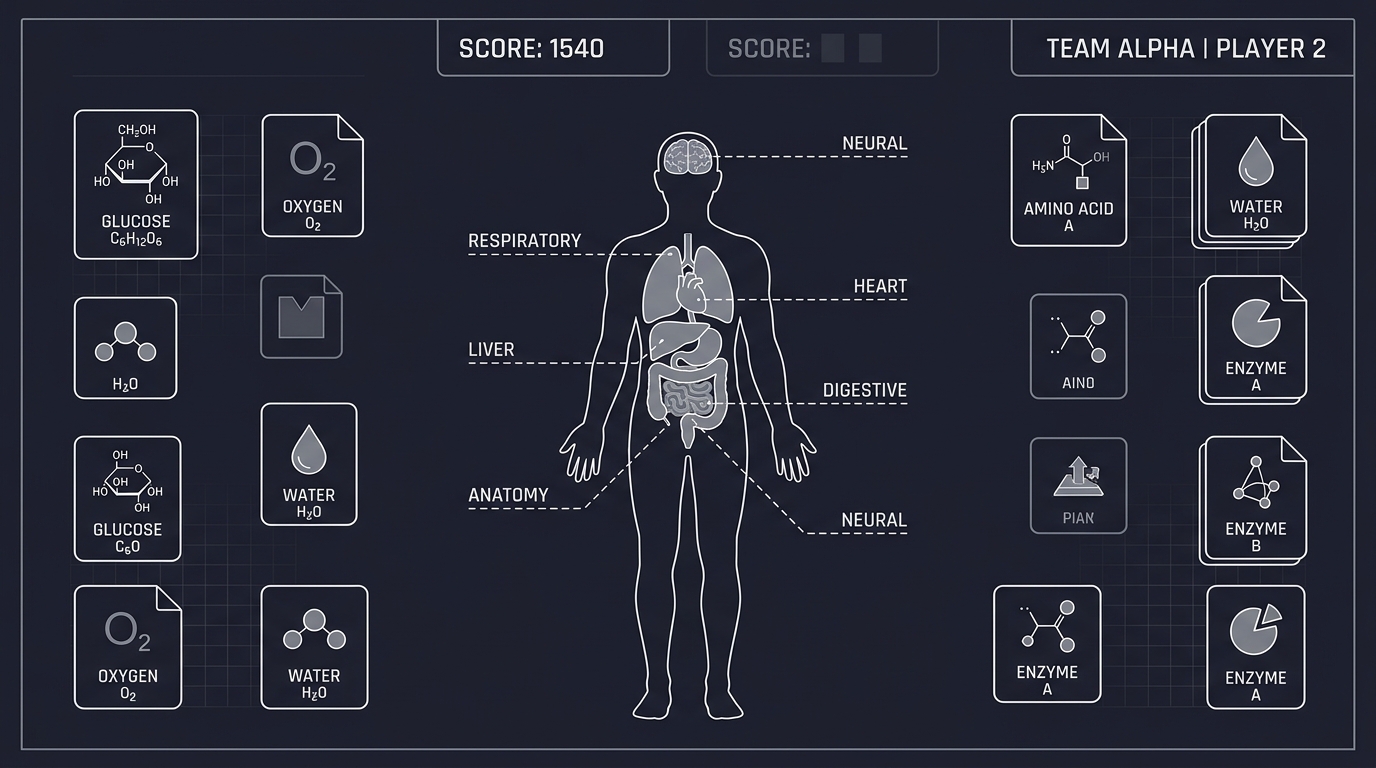
Scaling a paper activity across 255 school deployments creates real logistical problems. Materials need to be printed, shipped, replenished. Quality varies depending on print runs. Facilitators (pharmacy students with no prior teaching experience) need physical materials to arrive on time and in the right quantities. Any failure in the supply chain means a degraded learning experience.
The Solution
I designed and built a React-based interactive game that digitized the VIPP activity. Students worked in groups using a 25-sticker system to map chemical effects to organ systems, but now on a screen rather than a poster.
The digital tool solved three problems simultaneously. Scalability: no reprinting materials for 255 deployments. Consistency: every facilitation session used the same tool regardless of which pharmacy student was leading. Engagement: the digital interface matched the expectations of 14-year-old students who are, by default, more comfortable with screens than posters.
Design Considerations

The tool was designed for a specific context: a facilitated classroom setting where a pharmacy student guides a group of teenagers through the activity. This is not a self-serve app. The UX had to work for two user types simultaneously: the facilitator navigating the interface, and the students calling out answers and watching their choices populate on screen.
The tool went through iterative development alongside the clinical module content. The final version reflected post-Training of Trainers refinements, with the clinical accuracy of the sticker-to-organ mappings validated against the lecture content.
Why This Piece Matters
This is the "doctor who codes" project. The same person who designed the clinical content also built the technology that delivers it. That's the differentiator. Most health education programs outsource their tech to developers who don't understand the clinical nuances, or rely on clinicians who can't build the tools they envision.
The product thinking here is as important as the technical execution. The question wasn't "can we build an app?" It was "what's the simplest digital intervention that eliminates a real operational bottleneck across 255 deployments while maintaining or improving the learning experience?" A React component answered that question.
Part of a case study cluster. See also: Scaling Anti-Vaping Education and Training 100 Future Pharmacists.
* Images are conceptualized, not the real implementation to protect client's intellectual right