When Life Gets Loud: Reflections from MyPEACE at Kolej Vokasional Sepang
Organizer: Medical Mythbusters Malaysia (M3) Program: Bengkel Ketahanan Emosi MyPEACE Date: December 12, 2025 Venue: Kolej Vokasional Sepang, Selangor Collaborators: Yayasan Hasanah, Ministry of Finance
On December 12, 2025, I found myself standing in front of vocational students in Sepang, not as a doctor lecturing about pathology or treatment algorithms, but as someone trying to hand them something more fundamental: skills to survive the noise of being seventeen.
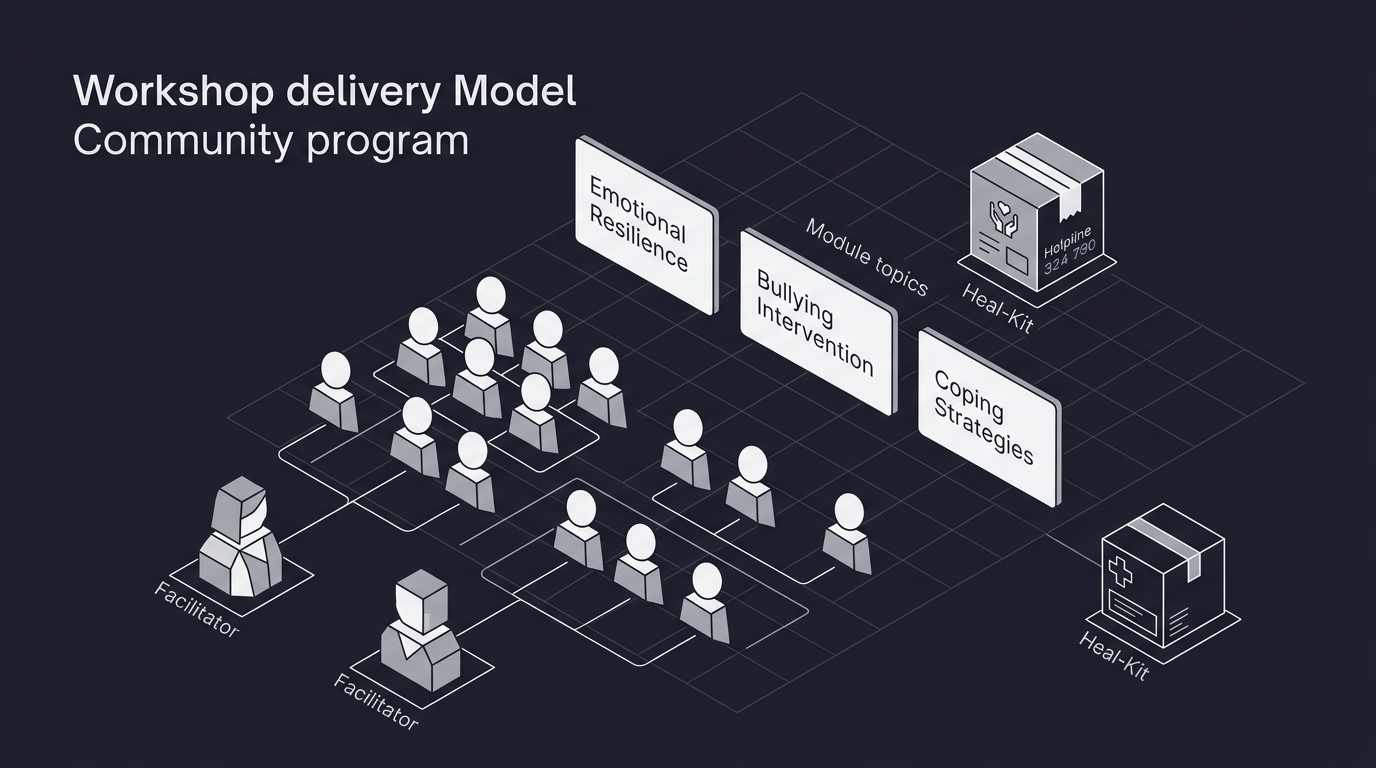
The event was MyPEACE (Positive Emotions, Awareness, Compassion, Empowerment), organized by Medical Mythbusters Malaysia in collaboration with Yayasan Hasanah and the Ministry of Finance. My session focused on emotional resilience and coping mechanisms, while my colleague Dr Amirul Amzar handled the more visceral topic of bullying intervention. Between us, we were trying to fill a gap that the education system often pretends doesn't exist: the fact that young people are drowning, and we keep handing them more textbooks instead of life vests.
The premise was simple but urgent. These students face relentless tests, not just in the academic sense, but the kind that chip away at your sense of safety. Family dysfunction, social media comparison spirals, peer rejection, economic anxiety. The usual litany of modern adolescent suffering. And in vocational schools particularly, there's often an added layer of being dismissed as "less than" simply because they didn't follow the conventional academic track. That dismissal breeds its own kind of desperation.
I opened with a slide that read: "This is a skills session, not a 'you are broken' session."
Because that's the thing. Resilience isn't a personality trait you're either born with or not. It's trainable, the same way riding a bicycle or hiking is trainable. You practice, you fall, you recalibrate, you get better. The problem is that we live in a culture that pathologizes normal human struggle, and then when young people actually need help, they either don't seek it (because asking for help means you're broken) or they get handed clichés instead of tools.
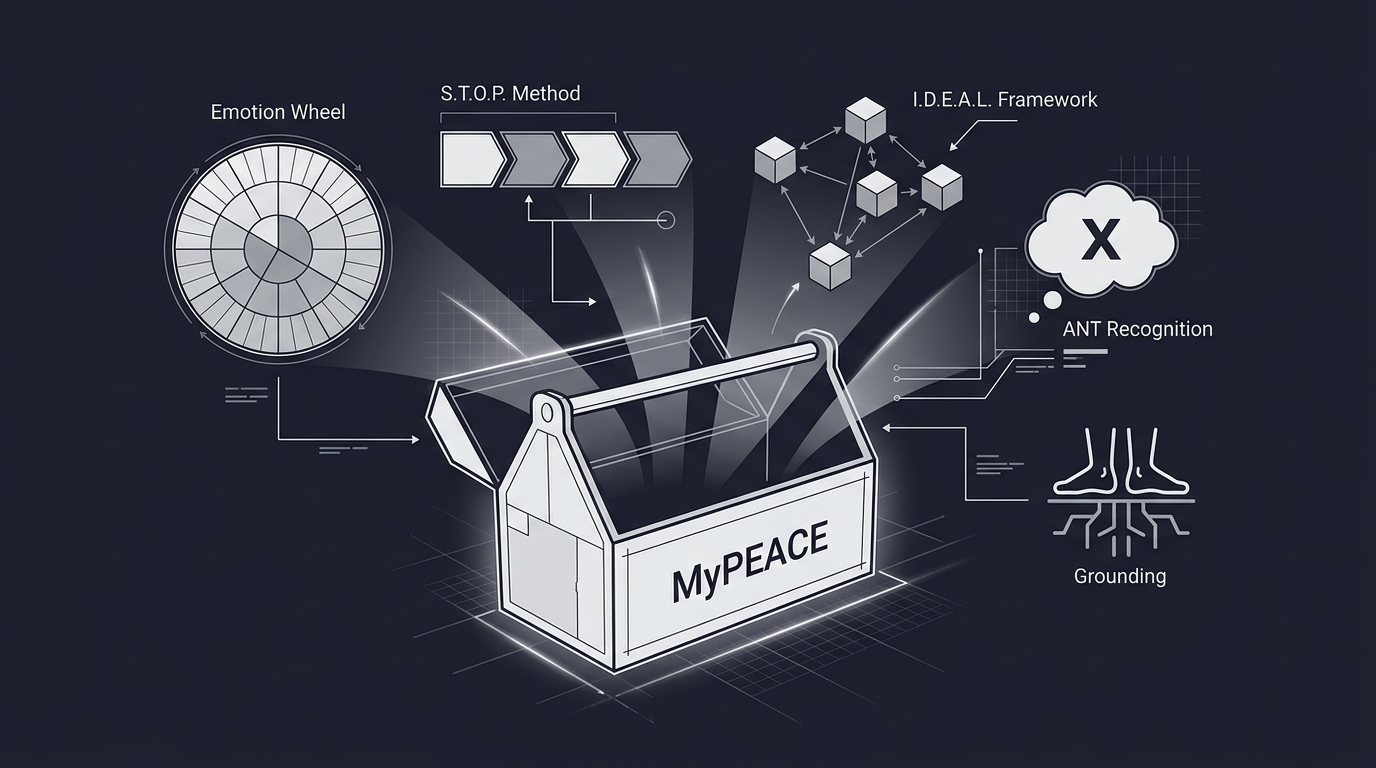
So I gave them tools. The emotion wheel, to help them move from vague, paralyzing feelings to specific, nameable ones. Grounding techniques for when panic hijacks the nervous system. The S.T.O.P. method (Stop, Take a step back, Observe, Proceed mindfully) for when they're about to explode. The I.D.E.A.L. framework for long-term problem solving. I walked them through automatic negative thoughts (ANTs), those reflexive cognitive distortions that turn minor setbacks into catastrophic narratives.
The challenge with workshops like this is always the same: you can't force insight. You can only create the conditions for it. Some students were engaged, others visibly skeptical. One kid in the back looked like he'd rather be anywhere else. Fair enough. At seventeen, I probably would have reacted the same way if some doctor had tried to teach me how to breathe through my problems.
But here's what I told them, and what I genuinely believe: pick one emotion, one ANT, and one tool to try this week. That's it. That is enough to start building real emotional resilience. You don't need to master everything. You just need to start somewhere.
The bullying module, led by Dr Amirul, was harder to watch. He used role-play scenarios, including one where a student named Majid gets lured to an abandoned building by seniors who plan to beat him. The students had to act out what Majid should do, what bystanders should do, how the situation could have been prevented. It was confronting in the way that good teaching should be. Bullying isn't an abstract concept in vocational schools. It's a daily negotiation of power, dignity, and survival.
At the end of the workshop, we distributed the MyPEACE Heal-Kit, a physical resource with coping tools, grounding exercises, and the number for Talian HEAL (15555), Malaysia's mental health crisis helpline. I don't know if any of them will use it. I hope they don't need to. But if they do, I hope they remember that reaching out isn't weakness, it's strategy.
Walking out of that school, I felt the familiar tension between hope and realism. Workshops like MyPEACE are valuable, but they're also band-aids on systemic wounds. These students need more than a half-day session. They need environments that don't crush their spirits in the first place. They need adults who see them as full human beings, not just problems to be managed or potential workers to be trained.
Still, I'd rather offer a band-aid than nothing. And maybe for one kid in that room, something landed. Maybe someone will try the S.T.O.P. method next time they're about to lash out. Maybe someone will name their emotion instead of numbing it. Maybe someone will call 15555 when the noise gets too loud.
That's all you can do, really. Plant seeds. Trust the process. Show up.
Because the alternative (not showing up, not trying, not believing that young people are worth the effort) is unacceptable.
Stress is inevitable. But skills are learnable.
And that matters.
* Images are conceptualized, not the real implementation to protect client's intellectual right