Healthcare AI Product Development: From Prototypes to Clinical Tools
Healthcare AI Product Development
Overview
Over the course of multiple product iterations for a healthcare technology company, I designed and built AI-powered clinical tools that sat at the intersection of medical knowledge and modern AI capabilities. The work spanned from early prototypes to production-ready applications, each iteration refining the approach based on clinical feedback and real-world constraints.
What Was Built
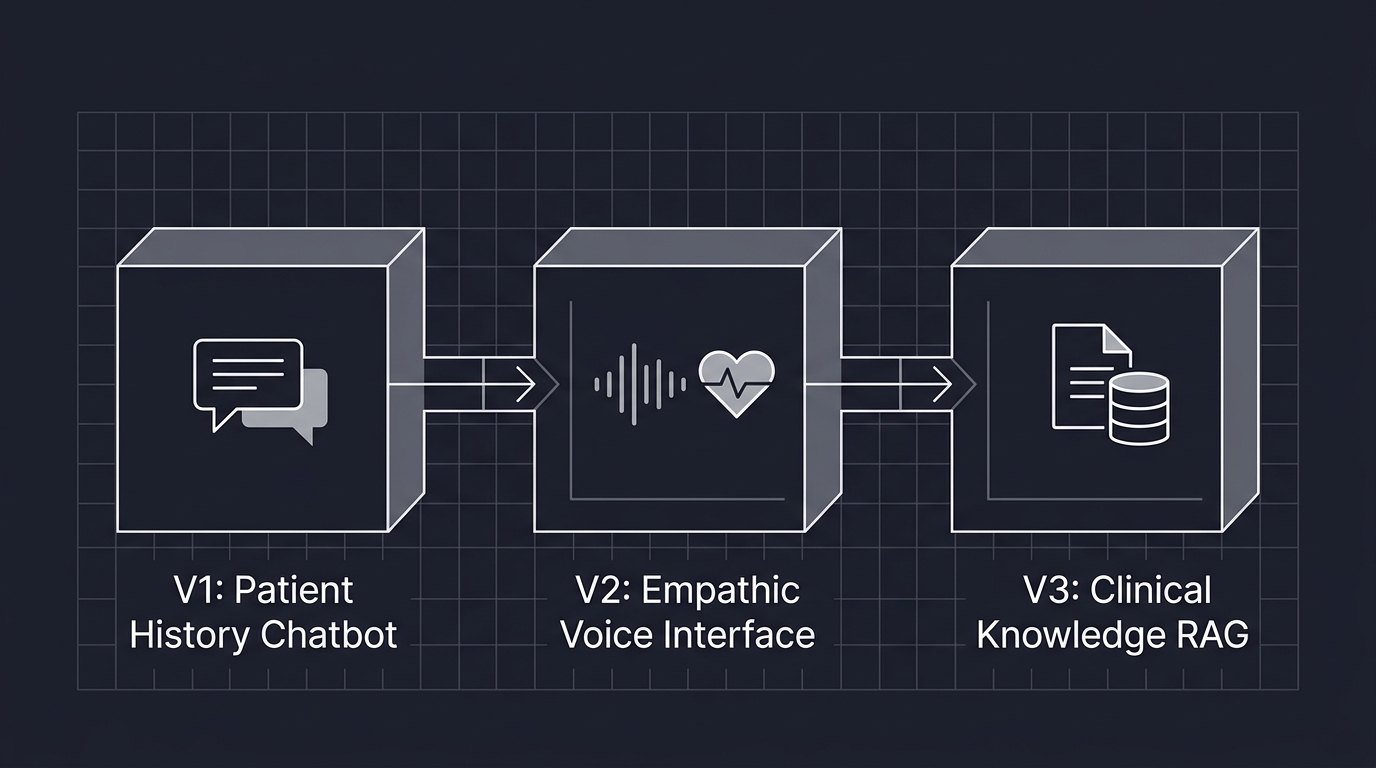
Patient History-Taking Chatbot. An AI-powered conversational tool designed to collect patient histories while they wait for a doctor consultation. The system guided patients through structured medical questioning, gathered relevant symptoms and history, and prepared a summary for the clinician. This reduced administrative burden on doctors while ensuring consistent, thorough history collection.
The tool integrated AI SDK with OpenAI for natural language understanding, CopilotKit for copilot-style UX patterns, and included features like PDF report generation, map-based location services, and a full administrative dashboard with data visualization.
Empathic Voice Interface. An experimental integration using Hume AI's Empathic Voice Interface to add emotional awareness to clinical AI interactions. The voice system could detect emotional states in the patient's speech and adjust its conversational approach accordingly, an important capability when dealing with anxious or distressed patients.
Clinical Knowledge Retrieval (RAG). Built retrieval-augmented generation systems that could query clinical knowledge bases to provide evidence-grounded responses. This was critical for ensuring that AI-generated clinical information was anchored in medical literature rather than hallucinated from training data.
The Iteration Journey
Each prototype addressed different aspects of the same fundamental question: how do you make AI useful in a clinical setting without compromising safety, accuracy, or the human elements of care?
Early prototypes focused on conversational flow and medical questioning logic. Later iterations added voice interfaces, emotional awareness, document analysis capabilities, and administrative tools for clinical staff. The progression reflected a deepening understanding of what clinicians and patients actually need, as opposed to what looks impressive in a demo.
What This Demonstrates
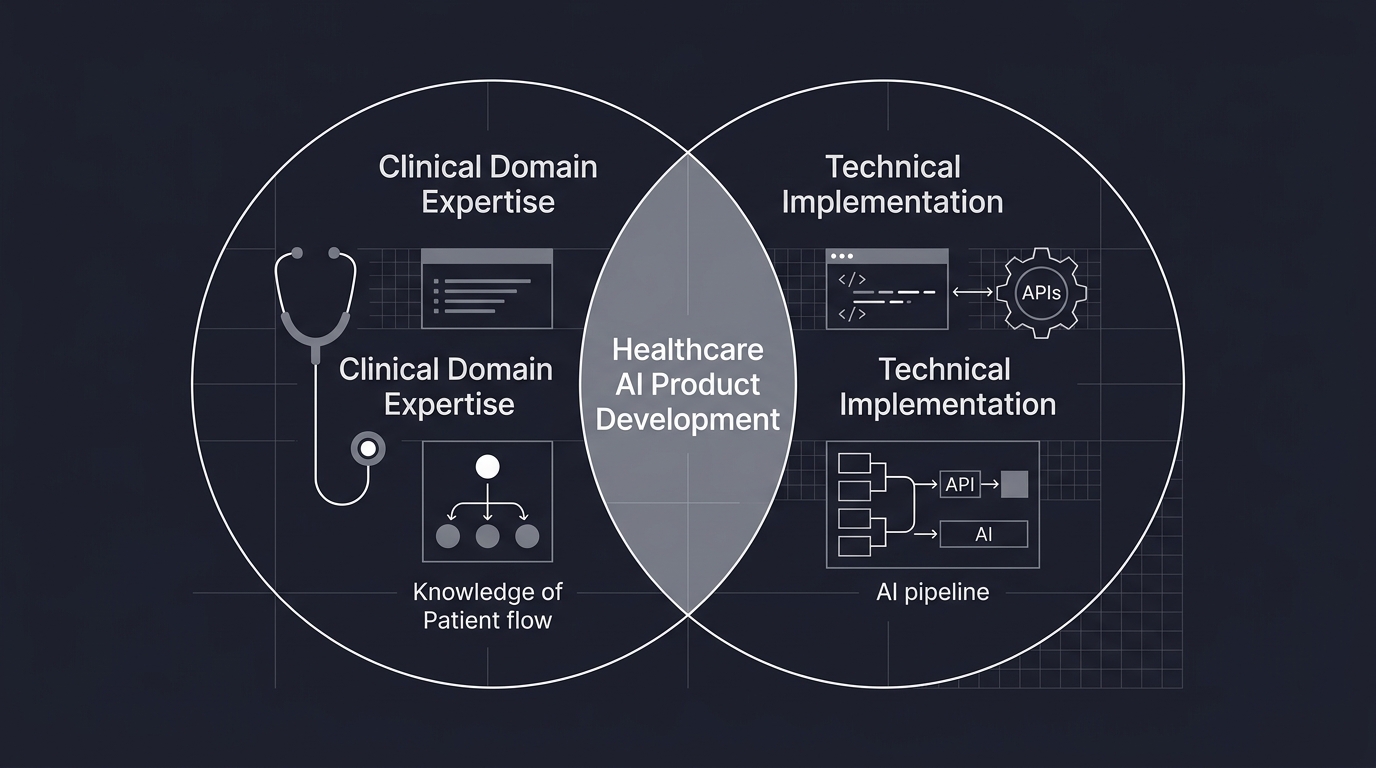
Healthcare AI product development requires someone who understands both the clinical domain and the technical implementation. Knowing which questions to ask a patient is a medical skill. Knowing how to structure those questions in a conversational AI flow is a technical skill. Having both in the same person eliminates the translation layer that typically slows healthcare technology development and introduces clinical inaccuracies.
* Images are conceptualized, not the real implementation to protect client's intellectual right